



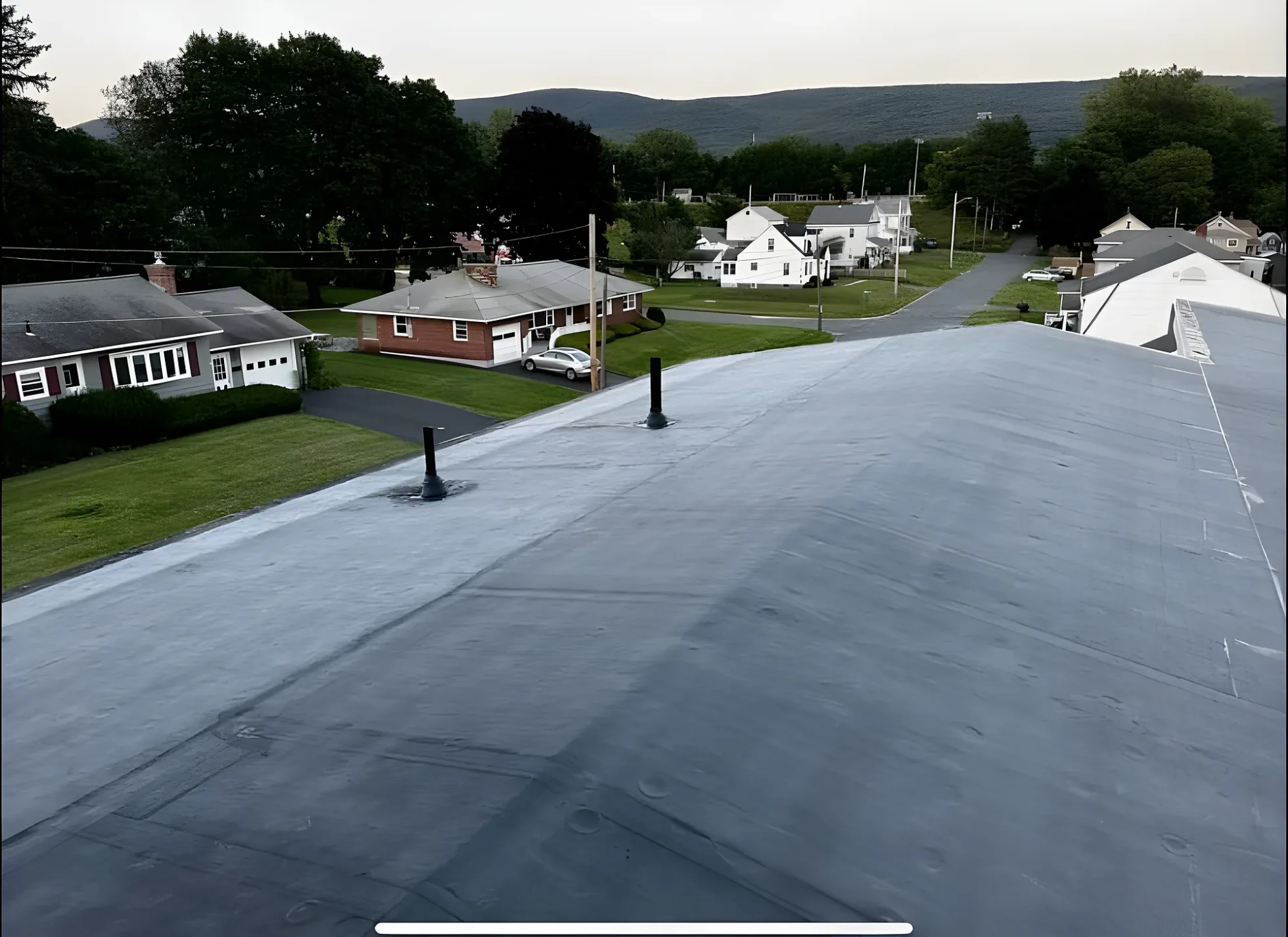
Flat & Low-Slope Roofing in Berkshire County
Carlisle certified installer. EPDM, TPO and modified bitumen.
New flat roofs for porches, additions, garages and dormers, with the drainage and edge work that keeps water moving off a roof with almost no pitch.
Why low-slope roofs leak
A flat roof is never perfectly flat. It needs a slight pitch to move water toward a drain, scupper or gutter, and when that pitch is missing or the old roof has sagged, water sits in puddles. Standing water finds every seam and nail hole, and in winter it freezes and pries them open.
Shingles are the other common mistake. Asphalt shingles are made for pitched roofs, and on a porch or addition with only a slight slope they let wind-driven rain back up underneath. A low-slope roof needs a continuous membrane instead.
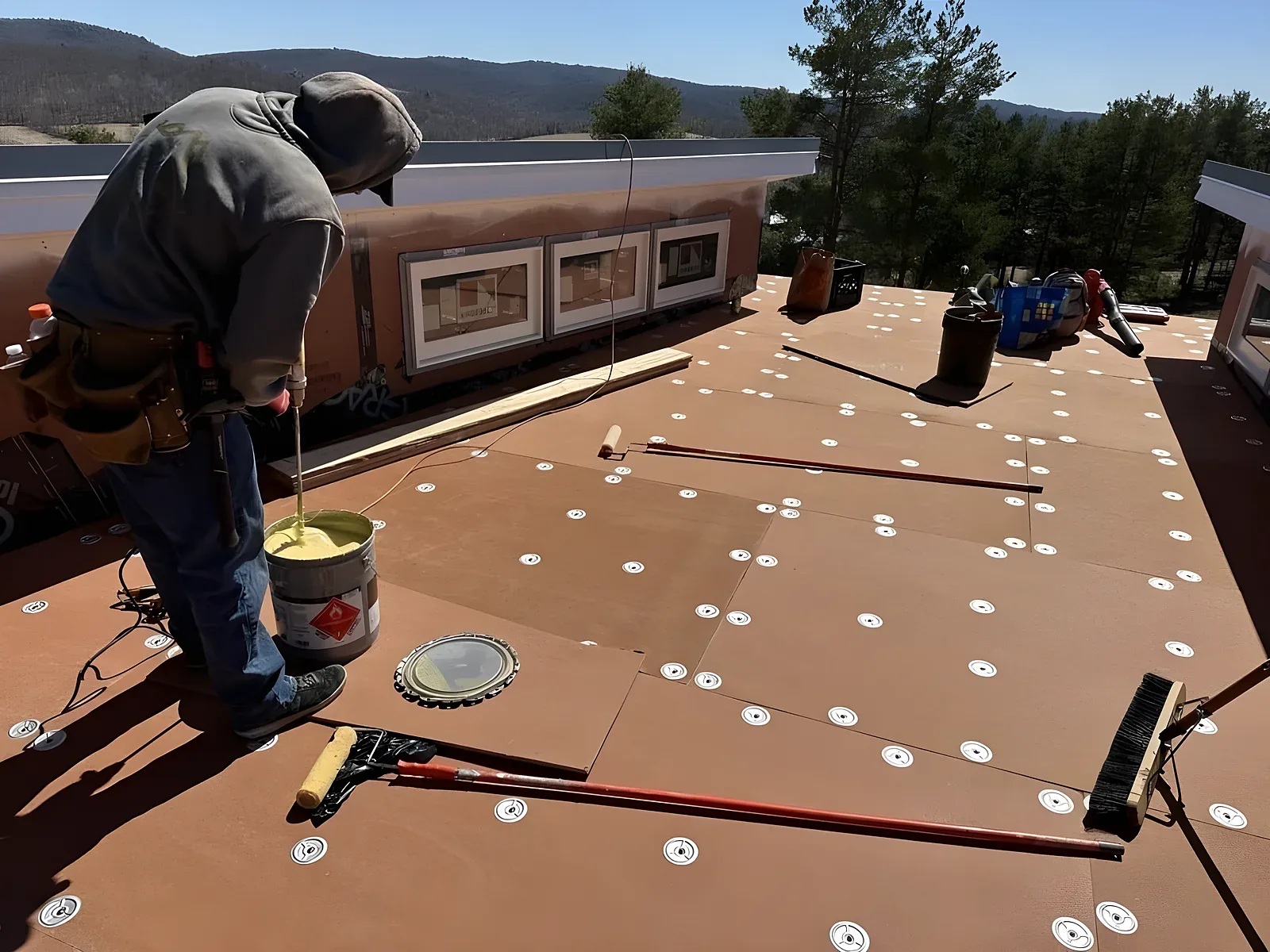
A flat roof replacement starts with stripping the old roofing and fixing the deck, then correcting the slope where water has been sitting. The new membrane goes down as one continuous sheet where possible, with every seam fully sealed where it is not.
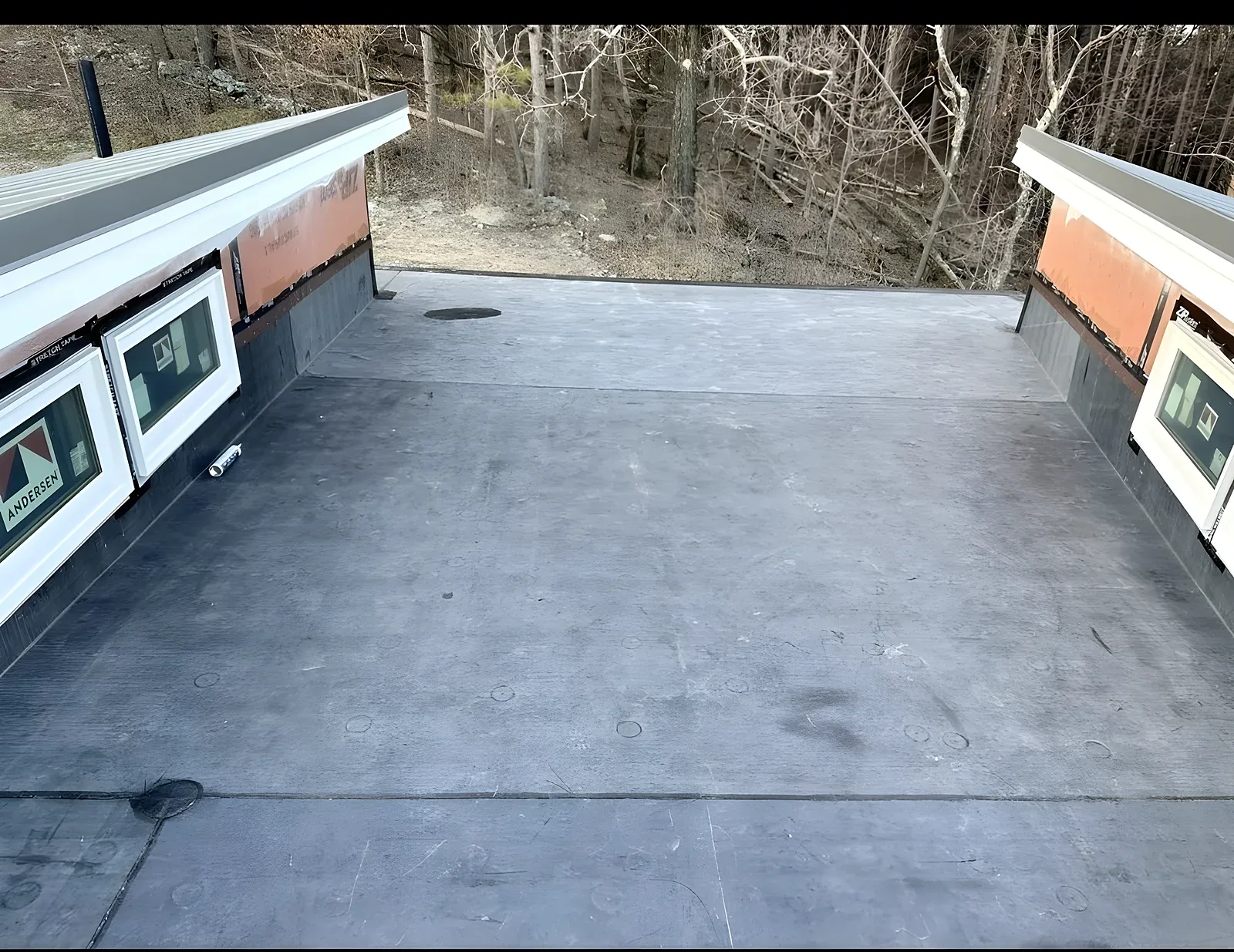
Flat roof systems we install
Which one fits depends on the roof's size, how it drains and how much foot traffic it gets.
EPDM rubber
A large single sheet of rubber membrane with few seams. A common choice for porches, garages and additions.
TPO
A white or light gray membrane with heat-welded seams that reflects summer sun.
Modified bitumen
Layered asphalt-based sheets that stand up well to foot traffic around rooftop equipment.
Porches, additions, garages and dormers
Many Berkshire houses have at least one roof section with too little pitch for shingles: a back porch, a sunroom, a shed dormer, a one-story addition or an attached garage. Those sections often leak long before the main roof does.
When we replace the main roof, we can replace those low-slope sections at the same time and tie the membrane into the shingles or metal with proper flashing where the two meet. That joint is where many flat-roof leaks start.
Larger flat roofs on multi-family and commercial buildings are covered on our commercial roofing page, and for a porch or dormer where you would rather have metal, low-slope standing seam is another option.
What changes the price of a flat roof
Flat roof prices come down to what is under the membrane as much as the membrane itself:
Tear-off and deck repair. Old flat roofs are often several layers deep, and wet or rotted decking under a leak has to be replaced.
Slope corrections. Building up low spots so water drains costs more up front and fixes the problem that ruined the last roof's seams.
Membrane type. EPDM, TPO and modified bitumen are priced differently, and so are their thicknesses.
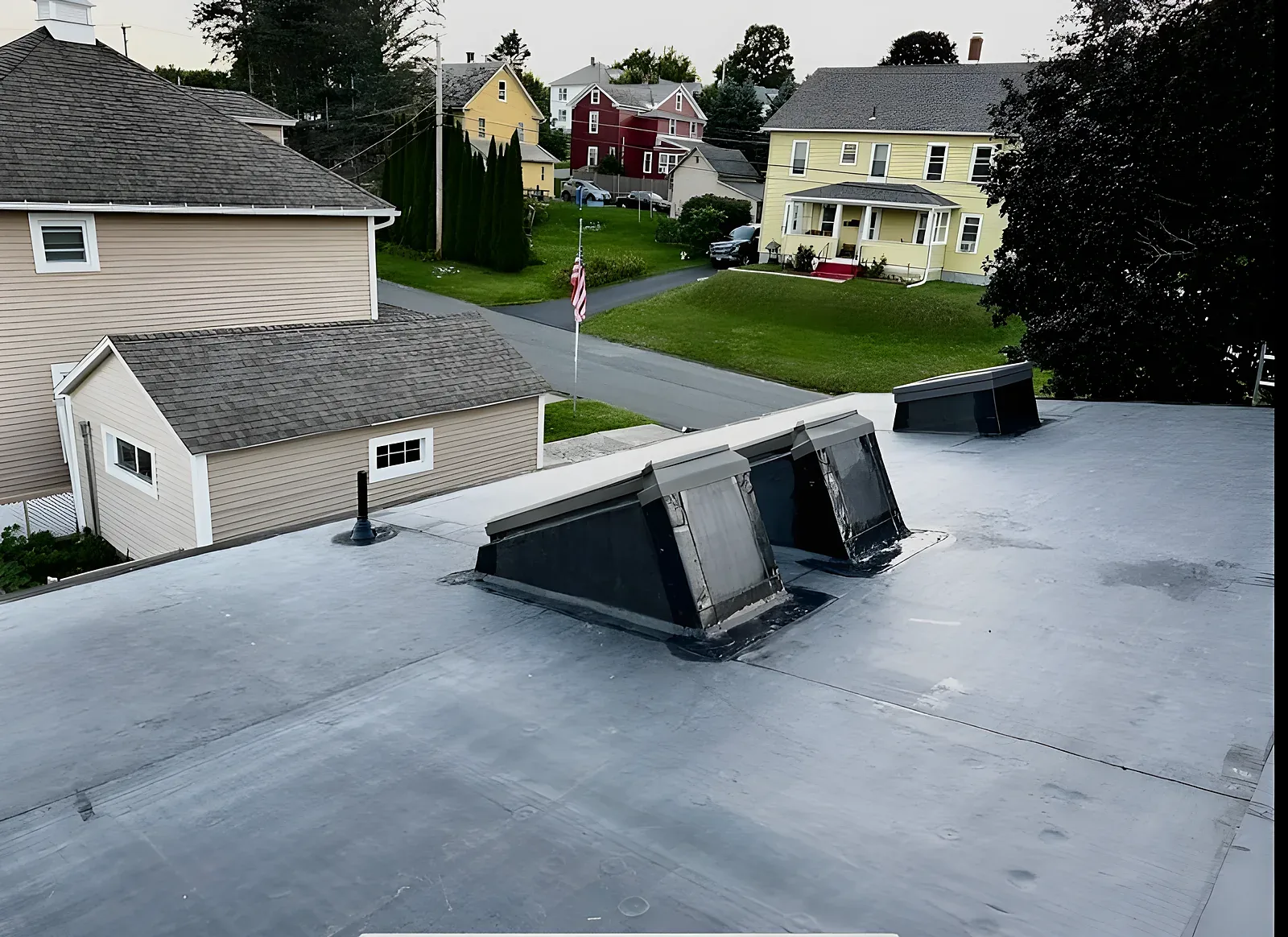
Edges and penetrations. Drip edge, gutters or scuppers, walls, skylights and vent pipes each need flashing, and tie-ins to a pitched roof take extra work.
Flat roofing questions
What homeowners ask about porch, addition and garage roofs.
Can I put shingles on my flat porch roof?
Not if it is close to flat. Shingles need enough pitch for water to run off, and on a low-slope roof rain backs up under them. A membrane roof or low-slope standing seam metal is the right fix.
Can you fix standing water on my flat roof?
Usually, yes. On a replacement we correct the low spots so water moves to a drain, scupper or gutter instead of sitting on the membrane.
Which is better, EPDM or TPO?
Both work well on houses. EPDM is a durable rubber sheet with very few seams, and TPO is lighter in color with heat-welded seams. We recommend one at the estimate based on your roof.
Can you replace my flat roof and main roof together?
Yes, and it is often the best time to do it, because the flashing where the flat section meets the pitched roof is done as one job.
Are you certified for flat roofing?
Yes. CBR is a Carlisle certified installer for flat roofing systems, and we are licensed in Massachusetts (LIC #101201, HIC #160959) and insured.
Get a free estimate for your flat roof
Tell us where the low-slope roof is and what it is doing. We'll inspect it, check the drainage and price the new roof in writing.